Uğur Kafkasyalı.

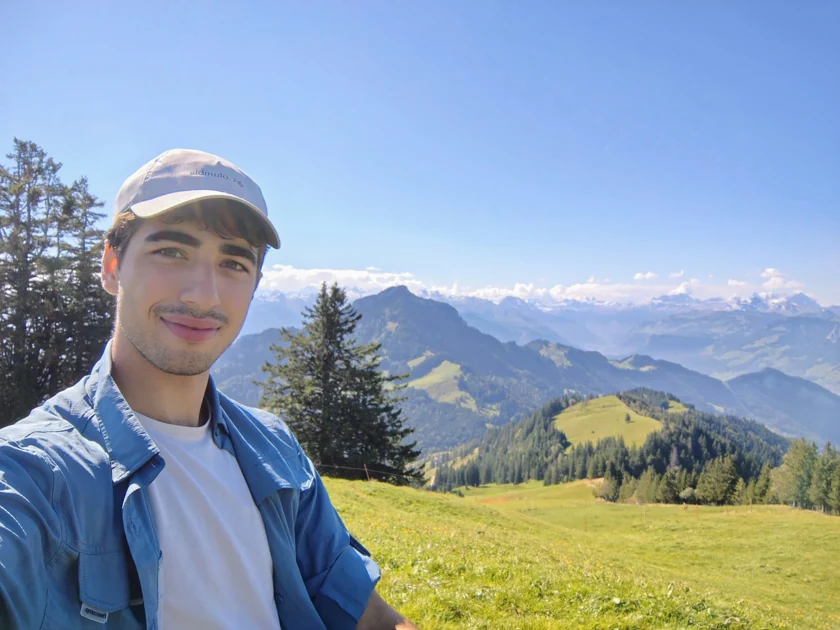
Uğur Kafkasyalı outdoors with mountains in the background

Hey, I’m Uğur, an engineer based in Zürich. I like problems that bring mechanics, software, electronics, and materials together. That’s taken me from quadruped robots and soft sensors to a prototype for decontaminating medical equipment. I especially enjoy finding a use for something I learned on a completely different project.

Selected projects

SAFARI · Risk-aware quadruped exploration

ETH Zürich · Master’s thesis · 2026

For my master’s thesis, I developed and field-tested a system that helps a quadruped search unfamiliar areas for potential hazards. It uses what the camera could reasonably have detected to decide where to look again.

Our system averaged 98.7% coverage of accessible mission area across 11 missions at three sites. I co-first-authored the SAFARI preprint and helped take the system to ELROB 2026.
The robot decides whether it has inspected an area closely enough to move on. 3 min 6 sec · Open MP4

ELROB · Field deployment of SAFARI

ETH Zürich · European Land Robot Trial · 2026

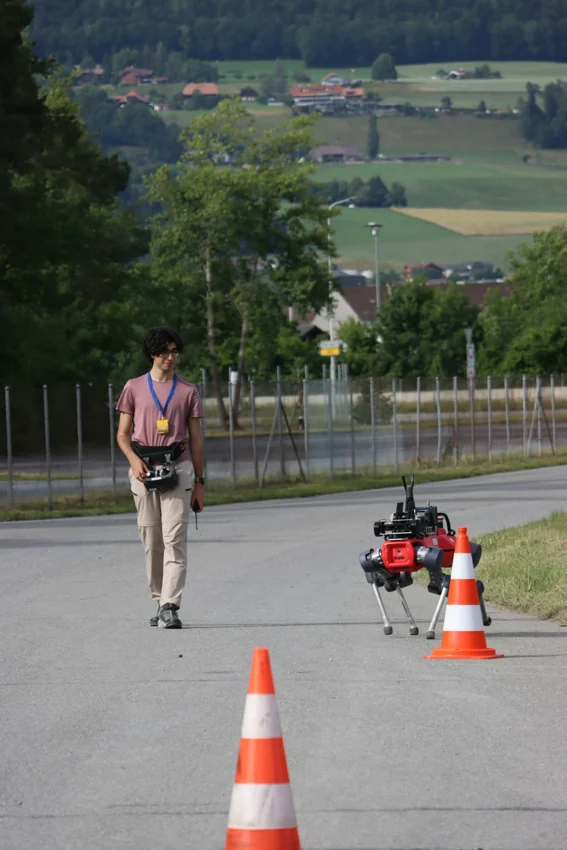
As a research assistant at ETH Zürich’s Robotic Systems Lab, I continued developing my thesis system and helped deploy it at the European Land Robot Trial in Thun, Switzerland. Team RSL received the Best Science Innovation award. Official ELROB results

A team member walks beside the quadruped on the ELROB course in Thun
The quadruped on the course in Thun. Team RSL after the award

Liquid-metal coils for soft robotics

Empa and ETH Zürich · Semester project · 2024

I compared two methods for moulding stretchable liquid-metal circuits. Direct injection produced reliable patterns with channels as narrow as 0.3 mm, so I adapted it to make a two-layer coil.

I built an actuator and a pressure sensor. The pressure response was approximately linear from about 15 to 121 kPa. Joule heating limited how much current the coils could carry and for how long.

Four-turn liquid-metal coil Eleven-turn liquid-metal coil Twenty-three-turn liquid-metal coil
Injection-moulded coils with 4, 11, and 23 turns, from left to right.

Fatigue testing of shape-memory alloys for cooling

Karlsruhe Institute of Technology · Bachelor’s thesis · 2023

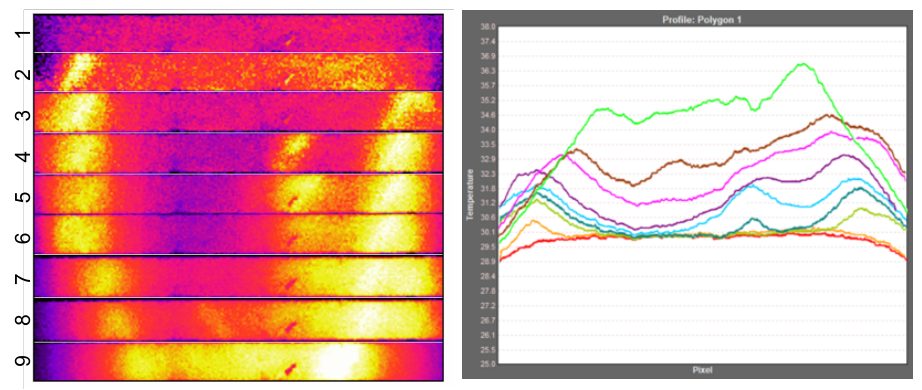
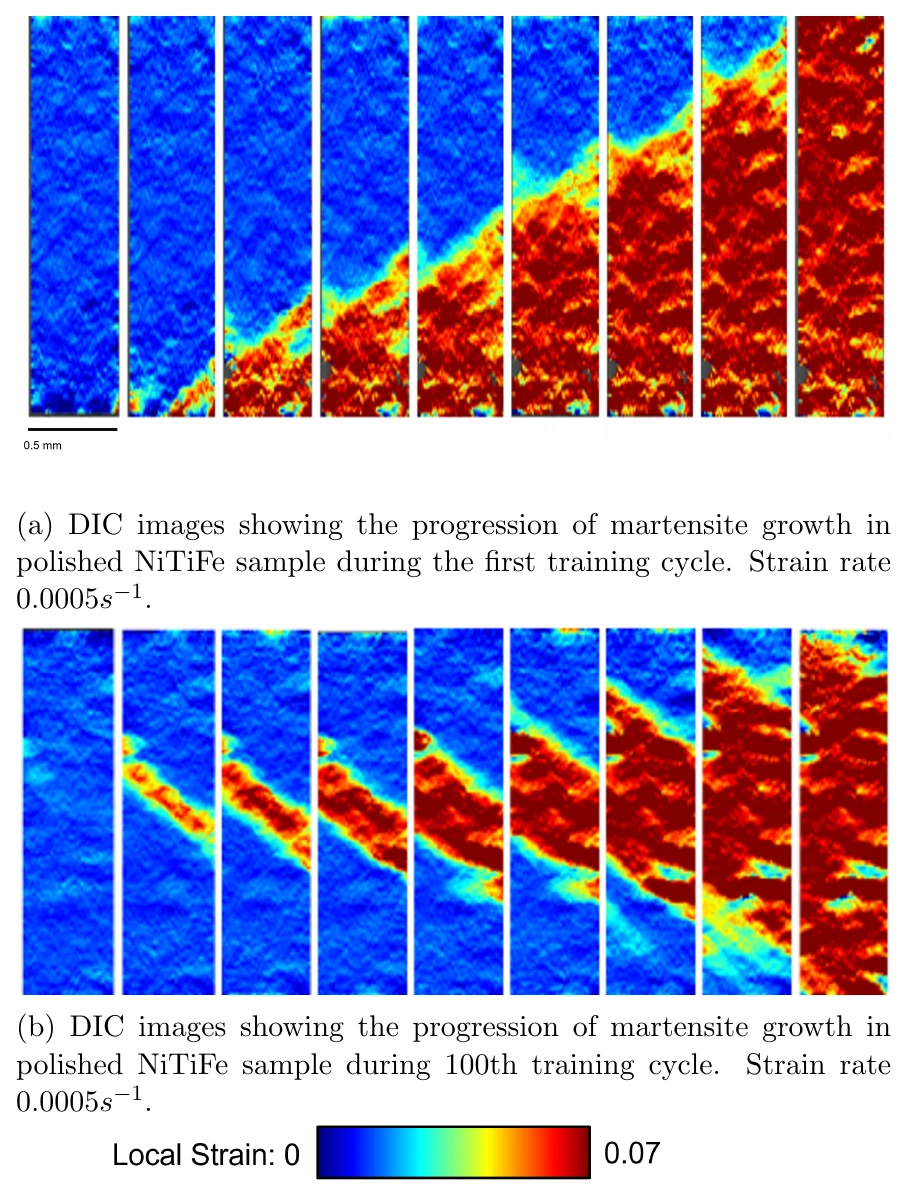
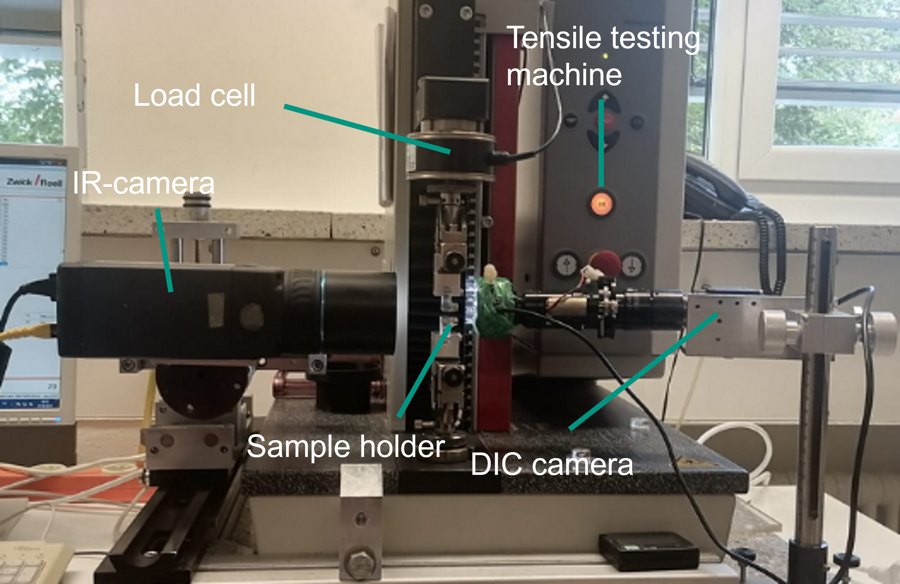
I investigated whether thin-film shape-memory alloys could sustain the repeated stretching and release needed for solid-state cooling. I cycled NiTiFe and TiNiCuCo specimens to failure, using infrared imaging to track temperature changes and digital image correlation to measure local strain.

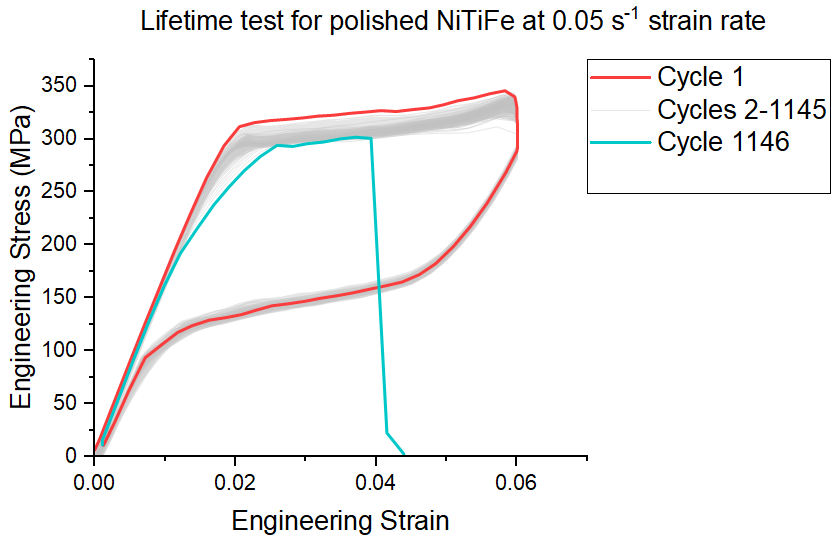
In my tests, the electropolished NiTiFe specimen survived 1,146 cycles, compared with 599 for the unpolished specimen. TiNiCuCo showed better material-level cooling efficiency, though all tested specimens fell short of the lifetime needed for practical use.

Electropolished NiTiFe specimen. Select a figure to enlarge it.

Engineering stress–strain curves, with the first cycle in red and the final cycle in cyan
Stress–strainLifetime test through failure at cycle 1,146.
Nine infrared frames showing local heating near the ends and then farther along the specimen
Infrared imagingHeat distribution during loading in cycle 102.
Sequential colour maps showing diagonal strain bands and a local strain colour scale from 0 to 0.07
DIC strain mapsStrain bands during the 100th training cycle.

Annotated tensile test rig

Other builds

LiTouch · Tactile sensing for RAVI

NEURA Robotics Challenge · 2025

Our team built RAVI, a robotic assistant for people with visual impairments. I was responsible for LiTouch, the robot’s vision-based tactile force sensor. I adapted and implemented the open-source 9DTact design and manufactured the sensor.

Our team won first place at the NEURA Robotics Challenge with RAVI. NEURA’s announcement and team photos.

Pressing the sensor produces visible contact regions in the live readout. 43 seconds · Open MP4

y/trace · Investigating robot contact events

Zurich Temporal AI Challenge · TUM.ai Hackathon · 2026

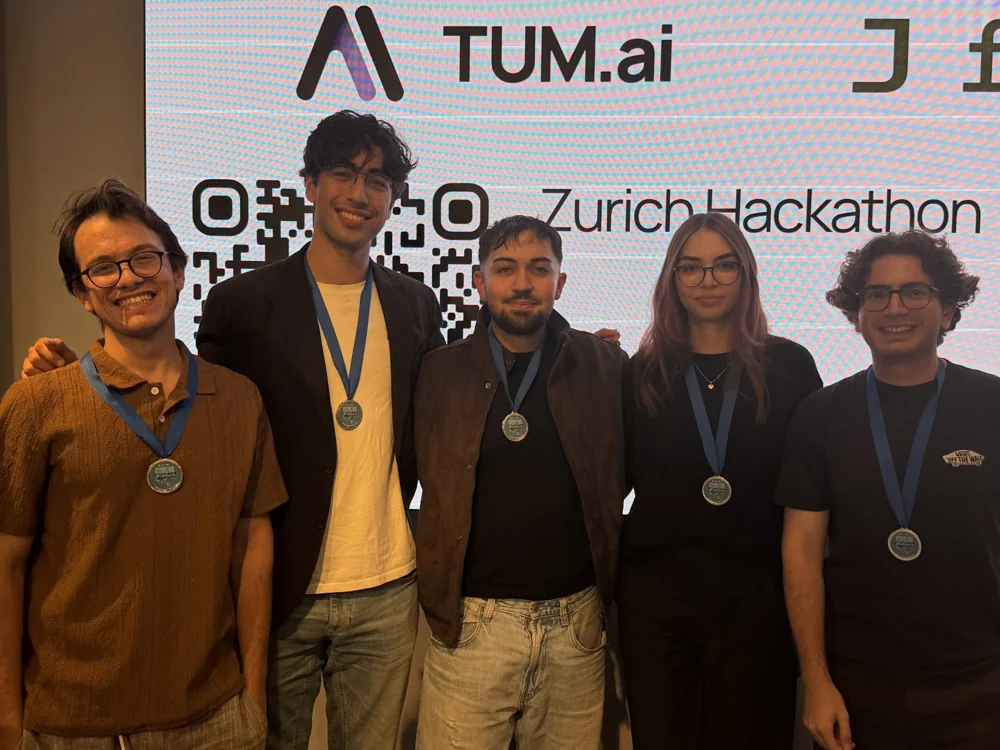
When a robot stops after contact, an engineer has to work out what happened from several time-synchronised signals. My team, y/agent, built a tool that replays recorded KUKA motion and joint torques. An engineer can select an event, inspect the measurements behind the model’s interpretation, and export the findings for someone else to review.

We placed second in Zürich and were selected for the Munich finals. GitHub repository · Award certificate (PDF)

Five y/agent team members wearing medals in front of the Zurich Hackathon screen
Team y/agent at the Zurich Hackathon.

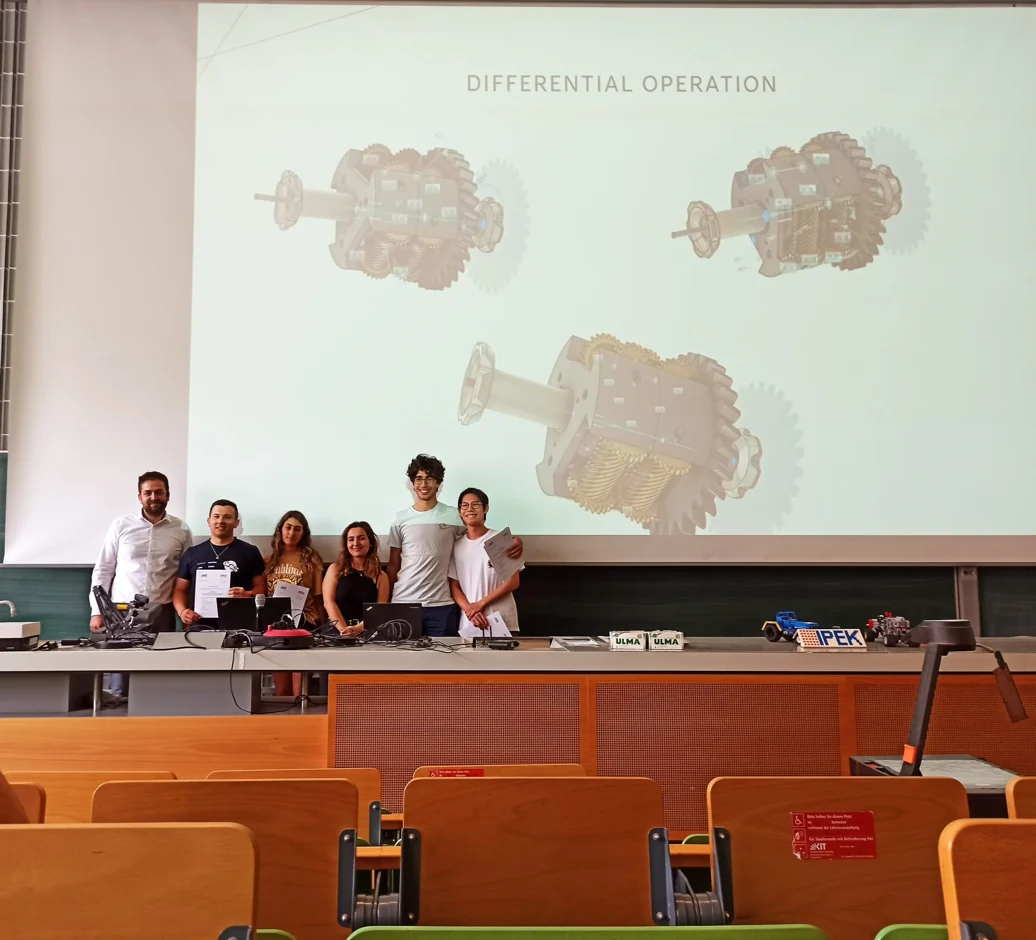
A manually lockable Torsen differential

KIT · Mechanical Design III & IV · 2022

The design brief called for a differential that could be locked manually. Our team added a manual lock to a Torsen differential, sketched the mechanism by hand, then built a CAD model and 3D-printed a prototype. We ran motion studies to check how the mechanism moved.

KIT’s Institute of Product Engineering recognised four of 54 teams. Our team was recognised for the quality of the work, particularly the creativity of the implementation.

KIT team in front of a presentation slide showing three views of the differential assembly
Our team and CAD views of the differential at the final presentation.

Magnetic force test bench

mu-Zero Hyperloop · 2022–2023

I designed and manufactured a multipurpose test bench for magnetic force characterisation and dynamic testing.

Our team received the Guiding Subsystem Award at European Hyperloop Week.